Dice Slam - Fun Classic Game
- 4.9
- Rating
- 50.00K
- Installs
- Free
- Price

 Analysis by App-foxy
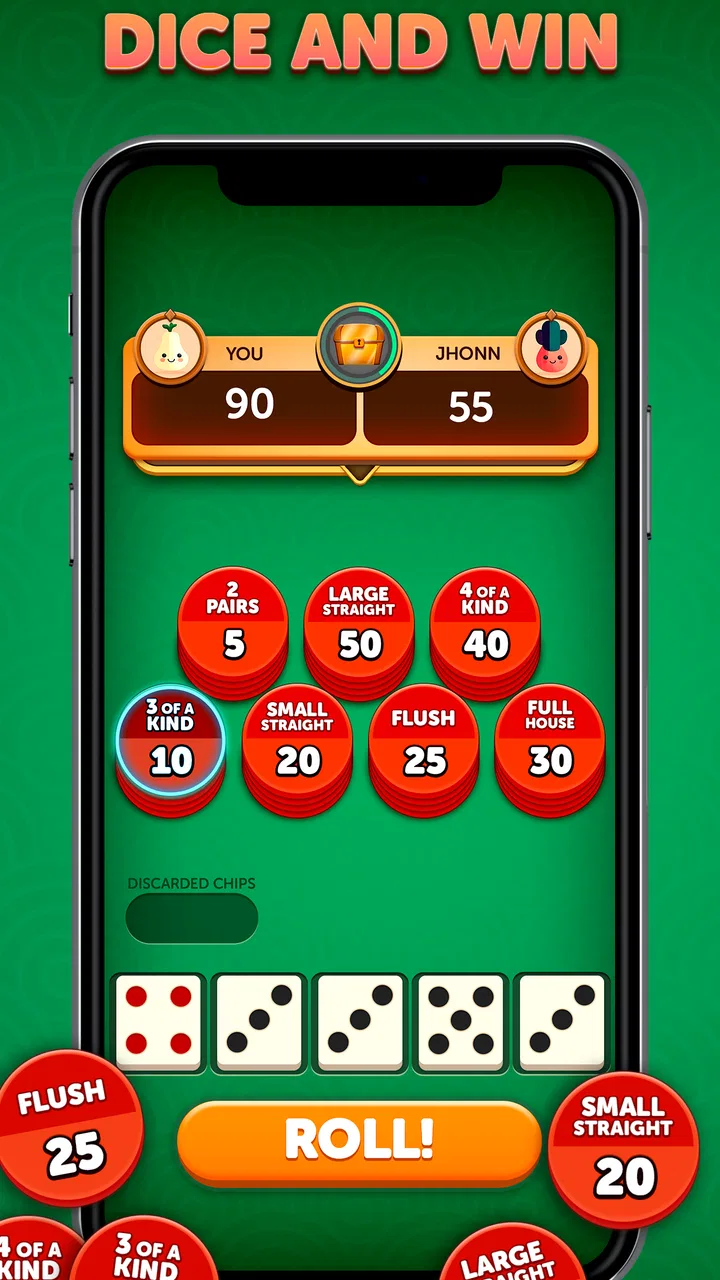
I spent time with Dice Slam - Fun Classic Game as a compact board game built around a very simple promise: roll dice, gather chips, and make better decisions than the other side. That simplicity is its biggest attraction. You can understand the basic idea quickly, yet the chip element gives each turn a little more weight than a completely luck-driven dice roller.
It comes from FunCraft Games and sits in the board-game category for Android. The game is free to install, which makes it easy to try without committing money first. Its store summary, “Roll Dice! Collect Chips!”, is brief but accurate: this is not presented as a long role-playing adventure or a complicated strategy simulator. It is a focused dice game for short sessions and casual competition.
My overall impression is positive, especially for players who enjoy traditional tabletop ideas but want something ready on a phone. Still, the free entry point should not be confused with unlimited value for every type of player. The appeal depends on whether you like repeating short rounds, accepting luck as part of the challenge, and making the most of a small set of choices.
You May Also Like

 Blood Strike: 2.5 Anniversary
Blood Strike’s Loadouts Turn Every Drop Into a Tactical Gamble
A close look at Blood Strike’s custom loadouts: how fast access to signature weapons reshapes its battle royale rhythm, rewards preparation, and narrows the gap between fights.

 Pandora - Music & Podcasts
Pandora’s Music Is Easy to Start, but Harder to Recover
Pandora’s strength is its low-effort path from a seed to a station. Its weak spot is how much confidence it asks you to place in connection, setup, and quiet recovery.

 8 Ball Pool
 Is Built on Rivalries, Rematches, and Routine
A close look at the rivalries, rematches, shared routines, and unanswered safety questions that turn a quick pool match into a persistent mobile community.

 Samsung Music
’s Quiet Strength Is Playing What You Already Own
Its reach comes less from spectacle than from dependable access to a personal library. That simplicity is both the app’s strongest retention engine and its ceiling.

 AccuWeather: Weather Radar
AccuWeather Review: A Quick, Clear Forecast for Everyday Decisions
For everyday plans, the best forecast is the one you can understand quickly. AccuWeather makes rain timing, radar, and local conditions easy to act on, with a few trade-offs.

 Hill Climb Racing
Why Hill Climb Racing Still Turns Crashes Into One More Run
A tiny car, a bumpy hill and one more upgrade: Hill Climb Racing keeps resurfacing because its simple chaos makes every near-miss feel personal.
More From Our News Desk
View All News


How the game feels in everyday play
The first thing I noticed is how quickly Dice Slam gets to its central action. There is very little conceptual baggage to learn. You roll, watch the result, and think about how to turn that result into chips. That makes it approachable for someone who normally avoids board games with lengthy rulebooks or several layers of menus.
A realistic use case is a short break when I want something more interactive than scrolling but do not have the attention for a large game. A few rounds can fit into a commute, a waiting room, or the final minutes before bed. The format also works well when introducing the game to a friend who has never played it, because the core loop is understandable without a tutorial session lasting half an hour.
At the same time, the simplicity creates a clear ceiling. Players looking for a deep campaign, a large collection of units, or a story-driven progression system should not expect Dice Slam to fill that role. Its satisfaction comes from the individual rolls and the decisions around them, not from building a huge account over weeks.
Luck matters, but choices still have a role
Dice games always involve uncertainty, and that is part of the charm here. A strong decision can be helped or hurt by the next roll, so I would not recommend treating every loss as proof that I played badly. The more useful mindset is to look for repeatable choices: when to protect a lead, when to chase more chips, and when a modest result is preferable to a risky attempt.
That distinction is important for new players. If you only focus on the biggest possible reward, the game can feel frustrating when the dice refuse to cooperate. I found it more enjoyable to judge each turn by its situation rather than by the maximum theoretical outcome. A smaller gain can be the right move when the alternative would give away control of the round.
This is one of the less obvious strengths of the design. The rules are light, but the game can still encourage basic risk management. It is not deep strategy in the same sense as a heavyweight board game, yet it rewards players who pause for a second instead of tapping through every roll automatically.
Chips give the rolls a reason to matter
Without chips, a dice game can become a sequence of disconnected results. The chip objective gives the session a visible direction. I am not simply waiting to see a number; I am watching whether that number improves my position and thinking about how much pressure to apply on the next decision.
For a better experience, I recommend setting a small personal goal before starting a session. I might focus on avoiding unnecessary risks, learning how quickly a round can change, or testing whether patience produces more consistent results. This turns a short game into a small exercise in decision-making rather than a string of random taps.
Another useful habit is to separate a bad roll from a bad plan. If the plan made sense with the information available, the result may simply have been unlucky. That helps keep the game entertaining instead of making every loss feel personal. Dice Slam is at its best when I accept that uncertainty and concentrate on the decisions I can actually control.
What the free entry point really means
The game is free, so the initial value is straightforward: I can install it and decide for myself whether the dice-and-chip loop suits me without paying an upfront purchase price. That is a meaningful advantage over a paid board game, particularly for casual players who may only want a few minutes of entertainment now and then.
There are in-app purchases ranging from $0.99 to $49.99 per item. That range makes it important to treat optional spending carefully. Free access gives the game a low barrier to entry, but a player who starts buying items can move far beyond the cost-free experience. I would set a personal spending limit before making any purchase, especially if the game becomes part of a daily routine.
The right way to judge the value is therefore in two stages. First, try the free version long enough to decide whether the core rolling and chip collection are enjoyable on their own. Second, only consider a purchase if it solves a specific problem for you and the benefit feels worth the amount shown at the moment of purchase. The free download is easy to justify; repeated spending requires a more personal calculation.
I would not recommend paying simply because a losing streak feels annoying. Dice-based games naturally produce uneven results, and spending money to chase a better outcome can make the experience less comfortable. If the basic loop is not enjoyable without purchases, extra spending is unlikely to fix the underlying mismatch.
Where it sits among familiar board-game alternatives
Compared with a physical dice game, Dice Slam is more convenient because there is no need to find dice, chips, a table, or another person who already knows the rules. The phone handles the setup, and that makes it a practical choice for a quick solo break or an impromptu session. The trade-off is that physical games offer a social presence and tactile feeling that a screen cannot fully reproduce.
Compared with a traditional strategy board game, this title is much easier to enter but less demanding over the long term. A complex tabletop game may reward planning several turns ahead, studying different factions, or learning a large rule system. Dice Slam instead gives me a smaller decision space that can be enjoyable precisely because it does not require preparation.
It also differs from a pure dice roller. The chip target adds a reason to care about the outcome, while the need to decide how aggressively to play can make a familiar mechanism feel more purposeful. If you want complete control and dislike random outcomes, a deterministic puzzle game will probably be a better match. If you enjoy making sensible choices under uncertainty, this one has a clearer appeal.
Who is likely to get the most value
I think Dice Slam is a good fit for casual board-game fans, people who enjoy dice mechanics, and players who want a short activity that can be learned almost immediately. It is also suitable for someone testing the waters before buying a more involved digital board game. The Everyone content rating makes it approachable for a broad audience, although the real question is still whether the player enjoys luck-based turns.
It can be especially useful as a low-pressure introduction to risk and reward. A parent, younger player, or board-game beginner can grasp the basic objective quickly, then gradually start thinking about timing and chip management. I would still explain that a smart decision cannot guarantee a win, because the dice remain an important part of the experience.
Players who prefer long-term progression, detailed customization, or a strong narrative should probably skip it. So should anyone who becomes irritated when a random result overturns a good position. The game is not a substitute for a full tabletop collection or a deep competitive strategy title; it is a smaller, faster experience with a narrower purpose.
Practical ways to play more thoughtfully
My first tip is to avoid making every turn about the largest possible chip gain. Consider the current position and the cost of failure. A modest result may preserve momentum, while an ambitious choice can leave you needing luck again immediately. This kind of thinking gives the game more texture without requiring complicated rules.
My second tip is to use short sessions as experiments. Try one session where you play conservatively and another where you take more chances. Pay attention to which style feels satisfying rather than assuming that the most aggressive approach is automatically best. This is a simple way to discover whether you enjoy the decision-making or only the excitement of the roll.
My third tip concerns spending. Because the game is free to start and purchases can reach a much higher amount than the smallest item, I would keep the no-cost version as the baseline. If you later buy something, decide the amount before opening the purchase screen and judge it as entertainment spending, not as an investment that must pay itself back through wins.
A fourth useful habit is to stop after a frustrating run instead of immediately trying to recover. Dice games can encourage one-more-round thinking, particularly when a loss feels undeserved. Taking a break protects the casual nature of the game and helps me return with clearer judgment rather than chasing a result.
Technical details that affect the decision
Dice Slam requires Android 7.0 or later, so it is available to many Android users while still excluding devices that have not reached that system level. The current version is 1.1.24599. I would check the device requirement before trying to install it on an older phone, especially if that phone is being used by a child or as a spare entertainment device.
The game has an average rating of 4.8 from around 1.8 thousand ratings, with around 135 written reviews and over 10 thousand installs. Those figures suggest that early players have responded warmly, but they should be read in context: the audience is still relatively small compared with long-established mobile board games. I see the rating as encouraging rather than a guarantee that its compact style will suit everyone.
It was released on September 23, 2025, so the product is still relatively new. That makes the current version worth evaluating on its own rather than assuming it has the depth or polish of a mature franchise. Newer games can feel fresh, but they may also appeal most to people who are comfortable with a more focused feature set.
The main trade-offs before installing
The strongest trade-off is between accessibility and depth. The quick rules are a benefit when I want immediate play, but they also mean there is less to uncover than in a larger board-game adaptation. I can recommend it for short, repeatable sessions; I cannot recommend it as the only board game on a phone for someone who wants endless variety.
The second trade-off is between free access and optional spending. The absence of an upfront price is helpful, and it lets players test the central loop honestly. However, the purchase range means the total value depends on self-control and on whether the free experience already feels complete enough for the individual player.
The third is between randomness and agency. Dice Slam gives me enough room to think about risk, but it does not remove the uncertainty that defines dice play. That balance will feel exciting to one person and unfair to another. Before installing, I would ask myself whether I enjoy adapting to luck or whether I prefer games where careful planning almost always decides the outcome.
My verdict for different kinds of players
For a casual player, I think this is worth trying. The free starting point, accessible board-game format, and short decision loop make the risk of installation low. It is a sensible choice when I want a small game that can be understood quickly and revisited without remembering a complicated campaign.
For a dedicated tabletop fan, the recommendation is more qualified. If you enjoy dice as a foundation and appreciate compact risk decisions, you may find the streamlined approach refreshing. If what you really want is deep planning, varied scenarios, or the atmosphere of playing around a table, a more substantial digital adaptation or a physical game will offer better value.
For a budget-conscious player, I would stay with the free access first and treat every purchase as optional entertainment. The game can be worthwhile without turning into a spending commitment, provided I am comfortable with the core loop as it stands. I would skip it if I already know that random outcomes make me want to buy my way out of frustration.
My final recommendation is a measured yes. Dice Slam is most valuable as a free, quick board-game diversion, not as a replacement for a deep strategy collection. FunCraft Games has chosen a clear and approachable concept, and the chip-focused decisions give the dice more purpose than a bare roll simulator. Install it if you want short sessions, simple rules, and a little risk in every turn; skip it if you need a rich campaign, guaranteed control, or a game that stays fresh through extensive complexity.
FAQs for Dice Slam - Fun Classic Game
01What is Dice Slam and how do you play it?
Dice Slam is a classic board game adapted for mobile devices where players roll dice to achieve specific combinations. The objective is to score the highest points by strategically choosing which dice to keep and which to reroll. The game offers a mix of luck and strategy, making it engaging for players of all ages.
02Is Dice Slam free to download and play?
Dice Slam is available as a free download on both Android and iOS platforms. The game includes optional in-app purchases that provide additional features such as special dice sets and game modes. However, these purchases are not mandatory, and players can enjoy the full gameplay experience without spending money.
03Does Dice Slam require an internet connection to play?
While Dice Slam can be played offline in single-player mode, an internet connection is required for multiplayer modes and to access leaderboards. Playing online also enables you to compete against friends or other players globally, enhancing the competitive aspect of the game.
04Are there any age restrictions for playing Dice Slam?
Dice Slam is suitable for a broad audience and is generally rated for players aged 3 and up. The game’s simple mechanics and engaging gameplay make it appropriate for children, while its strategic elements can also captivate older players, ensuring fun for the entire family.
05What are the key features that make Dice Slam unique?
Dice Slam stands out due to its sleek interface, smooth animations, and customizable dice. The game offers various modes, including solo, multiplayer, and tournament play, catering to different preferences. Regular updates provide new challenges and seasonal events, keeping the gameplay fresh and exciting.
Pros
- Engaging gameplay with simple mechanics.
- Visually appealing design and animations.
- Easy to learn for all age groups.
- Quick matches ideal for short sessions.
- Free to play with optional purchases.
Cons
- Ads can be intrusive and frequent.
- Limited game modes available.
- Requires internet connection to play.
- Occasional lag on older devices.
- In-app purchases can be pricey.

Dice Slam - Fun Classic Game
Gallery